Stories Across Time

The earth reveals but a sliver of time —
yet every stone holds a secret close to its heart.

From quiet mineral, cradled in nature's arms, it journeys through the ages,
woven into the ways we live, into legend,
and the beliefs we have strung across the centuries.

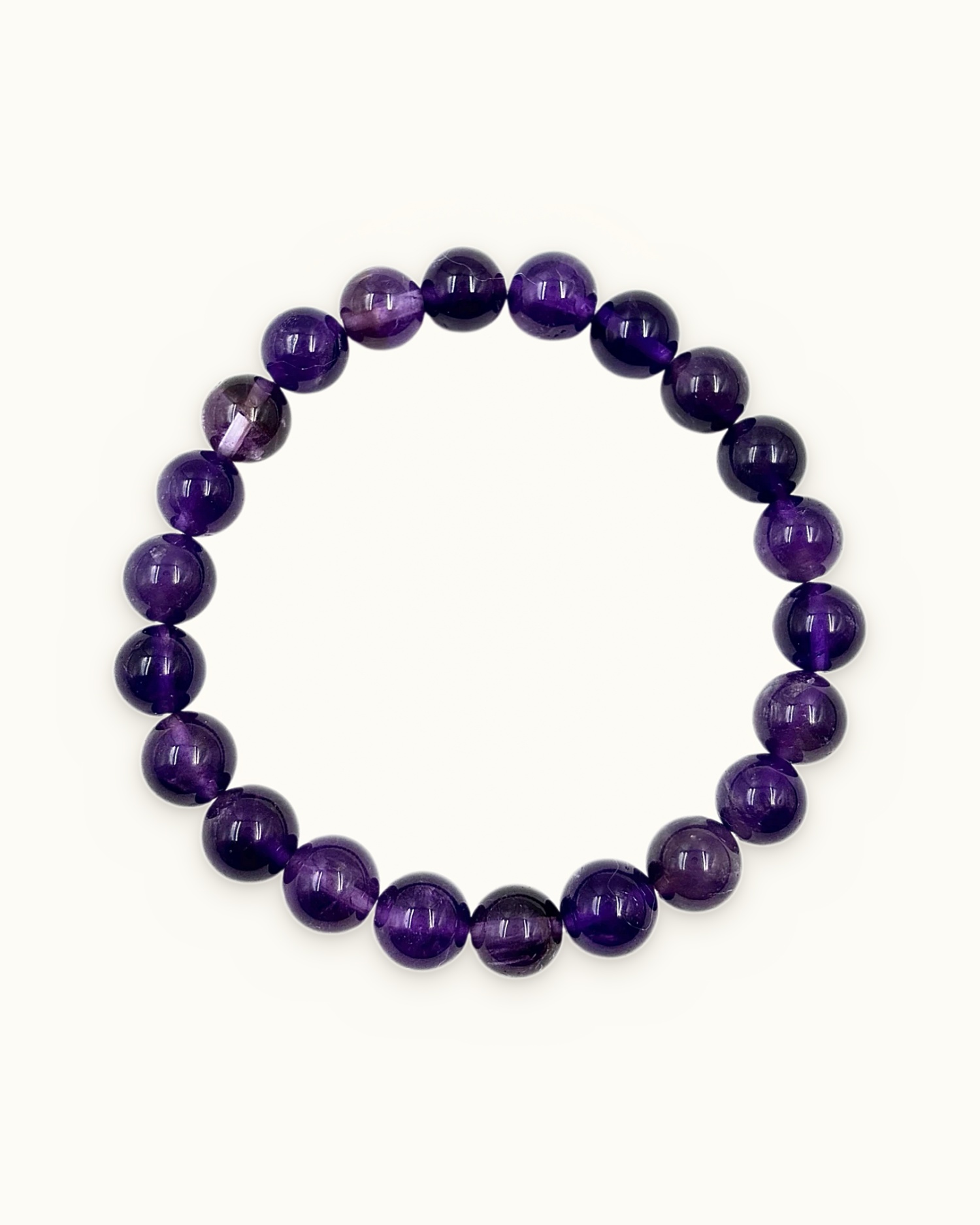
I Amethyst bracelet

Amethyst

The purple stone once counted among the jewels of royalty

There was a time when amethyst was prized no less than ruby, emerald and sapphire — chosen to crown the regalia of royal houses the world over. Its deep allure is born of iron woven with natural radiation beneath the earth's crust, drawing out shades of violet from the palest, clearest lavender to a deep and commanding purple.

Its story has been bound to wine since ancient Greece. The name Amethyst traces back to améthystos — "not intoxicated." People of old believed the violet gem could guard the mind against a wandering, clouded state, and even carved it into cups for their feasts. So, over time, amethyst came to stand for clarity and self-possession.

That meaning still holds its light today — amethyst as a token of calm, of focus, and of seeing clearly the truth within. It has long been honoured as the birthstone of February.

Family
Quartz
Color
Purple
Hardness
7 (Mohs)
Birthstone
February
Bead size
8 mm
Price
฿890
Enquire · Made to order →
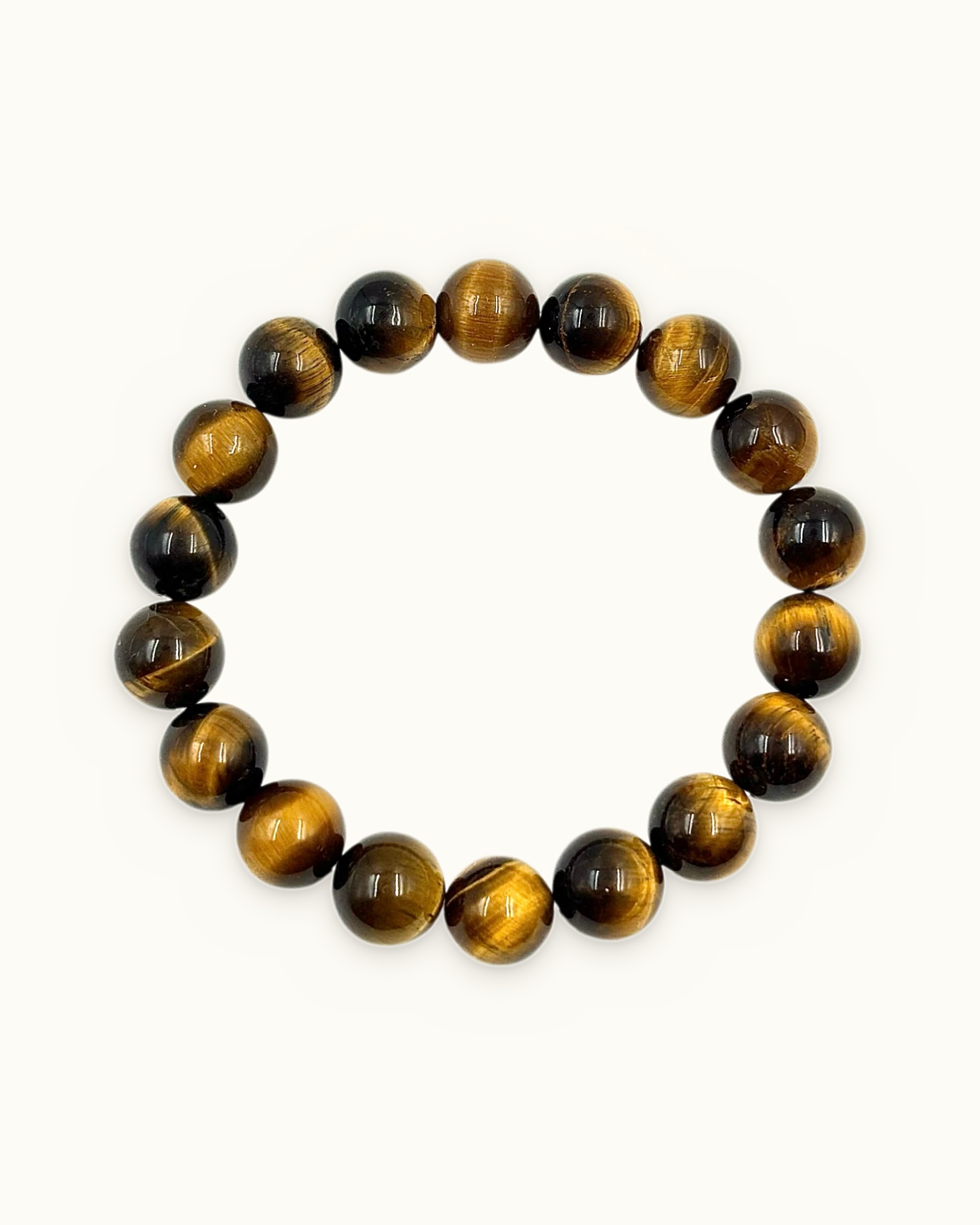
II Tiger's Eye bracelet

Tiger's Eye

A golden eye, a billion years in the making

Long before it became that unmistakable band of gold, Tiger's Eye began its journey in ancient seabed sediments in South Africa and Australia, some 2,500 million years ago. Through countless pressures and shiftings of the earth's crust, its mineral fibres were re-forged until they catch the light in a slow, living shimmer — like the eye of a watchful predator gazing back.

Because that shifting light reads like "an eye that is always watching," people of the past tied the stone to protection. It is said Roman soldiers carried Tiger's Eye, carved into talismans, into battle — a sign of courage, of shelter from harm, and of a spirit that never falters.

Yet the "sight" of Tiger's Eye does not stop at guarding against the world outside. It reaches inward too — seeing things as they truly are, recognising the fear within, and stepping past it with a steady heart.

So Tiger's Eye is a stone of resolve — for the moments you need assurance, a clear head to decide, and the quiet strength to carry yourself forward.

Family
Quartz
Color
Golden brown
Hardness
7 (Mohs)
Character
Golden chatoyant band
Bead size
8 mm
Price
฿790
Enquire · Made to order →
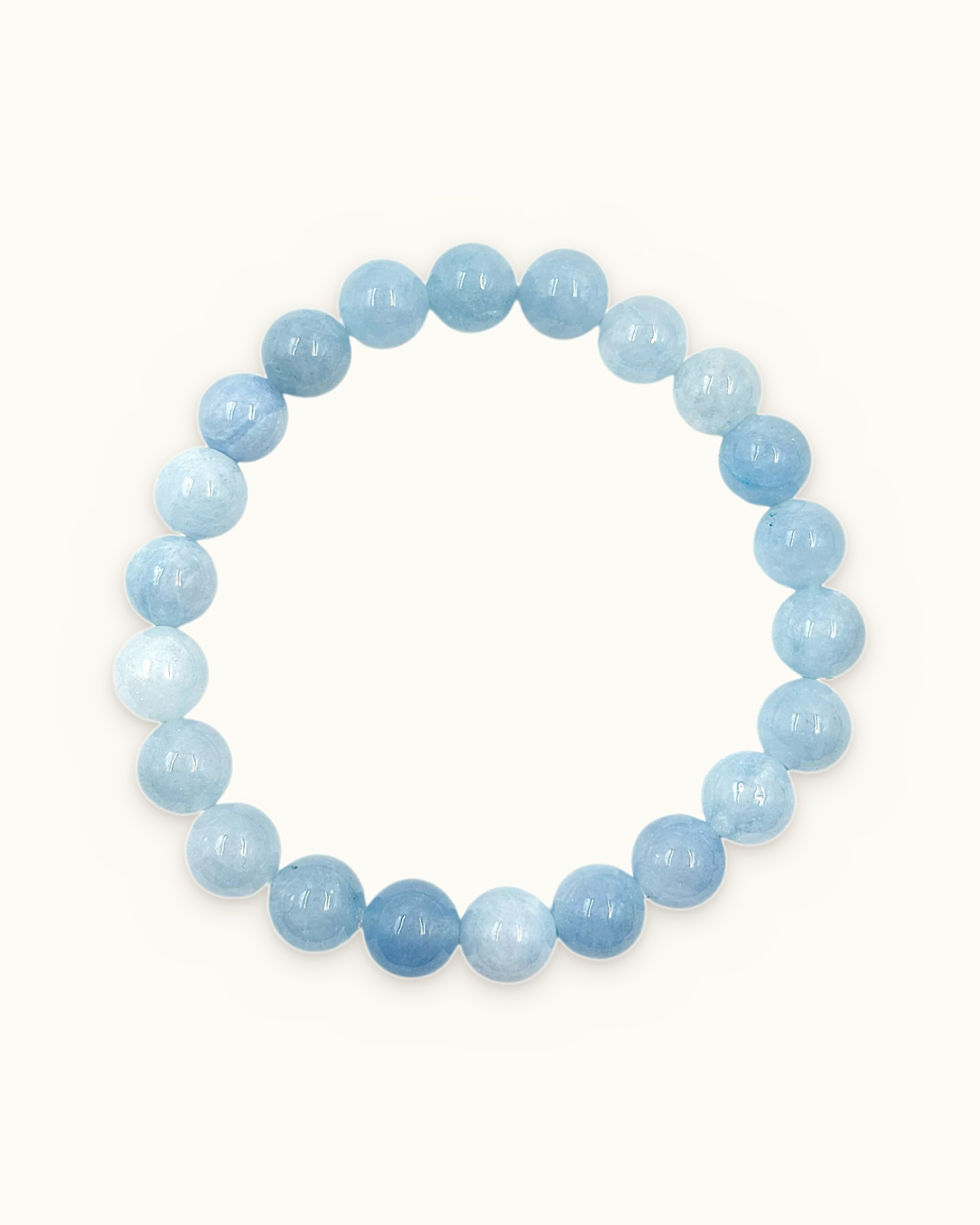
III Aquamarine bracelet

Aquamarine

A prayer from the sea

The name Aquamarine is rooted in the Latin aqua marina — "sea water" — and its colour mirrors that water perfectly, from the clear blue of shallow surf to the deep blue-green of the open ocean. It belongs to the same beryl family as emerald, with iron settled within that gives rise to its singular hue.

When storms rose, sailors of old would hold aquamarine in hand as they set out across the ocean, trusting it to calm the swell, carry peace, and shield them from the sea's hidden dangers. Some legends even carved the crystal into the likeness of Poseidon, or Neptune, god of the sea — an amulet to steady the heart.

As aquamarine weathered the cold winds and the waves alongside people, its meaning widened — from mere "protection" to a symbol of courage, of smooth passage, and of the calm breeze we all hope for when we set out. Its gentle nature has long been linked, too, to love and to a partnership that stays smooth and lasting.

From a sailor's guiding charm to the birthstone of March, Aquamarine still keeps its old role, undimmed — staying beside a heart that seeks calm as it journeys onward, a compass to remind you that someone who loves you is always waiting for your return.

Family
Beryl
Color
Blue to blue-green
Hardness
7.5–8 (Mohs)
Birthstone
March
Bead size
8 mm
Price
฿890
Enquire · Made to order →
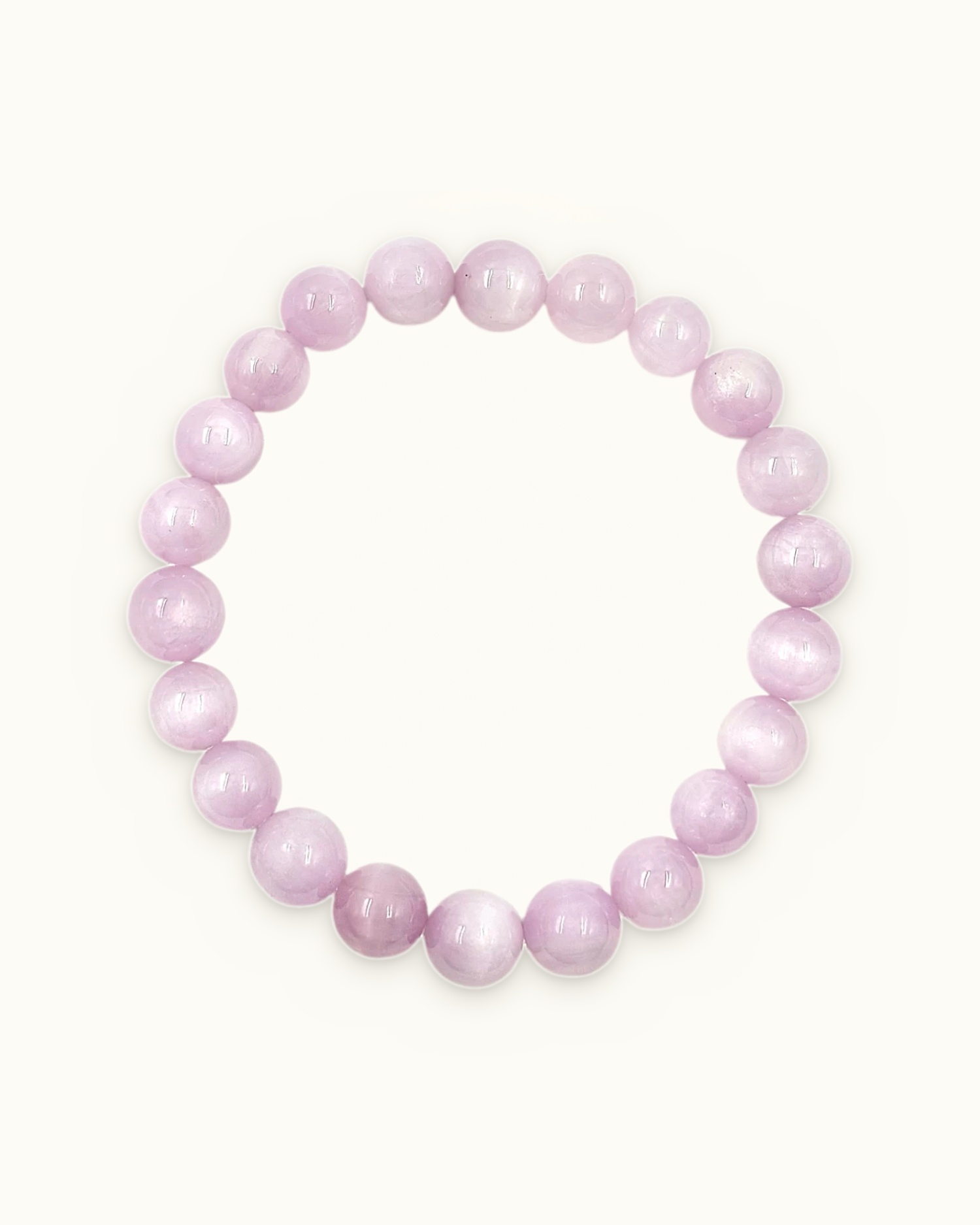
IV Kunzite bracelet

Kunzite

The evening stone

Kunzite did not grow out of ancient legend; it arrived as "a gem of the modern age." It was identified in 1902 in the hills of San Diego, California, by George Frederick Kunz — a leading gemmologist for Tiffany & Co. — who proved this softly pink crystal to be a new variety of spodumene, unlike anything found before. The following year, the gem was named Kunzite in his honour.

Its charm lies in delicacy — from pastel pink to a deep violet-rose. Through a gemmological effect called pleochroism, it reveals different shades and weights of light from every angle. And being tender by nature, sensitive to strong sun, its colour will slowly fade with long exposure.

This gentleness is just what earned Kunzite its name, the "Evening Stone" — a gem that never asks for the harsh midday sun to stand out, but glows most beautifully in the soft calm of evening light.

With a pink so full of tenderness, modern belief has come to know Kunzite as a "Stone of Emotion & Heart" — a gem of opening up, of embracing your own feelings, and of forgiveness. It is a quiet reminder that, in a demanding world, we need not be strong all the time — and that admitting the fragile places in our hearts is not weakness.

And true to its name as the evening stone, Kunzite is often held to stand for a love that is pure and unconditional — as lovely as the last light of the day.

Family
Spodumene
Color
Soft pink
Hardness
6.5–7 (Mohs)
Care
Avoid strong sun
Bead size
8 mm
Price
฿1,290
Enquire · Made to order →
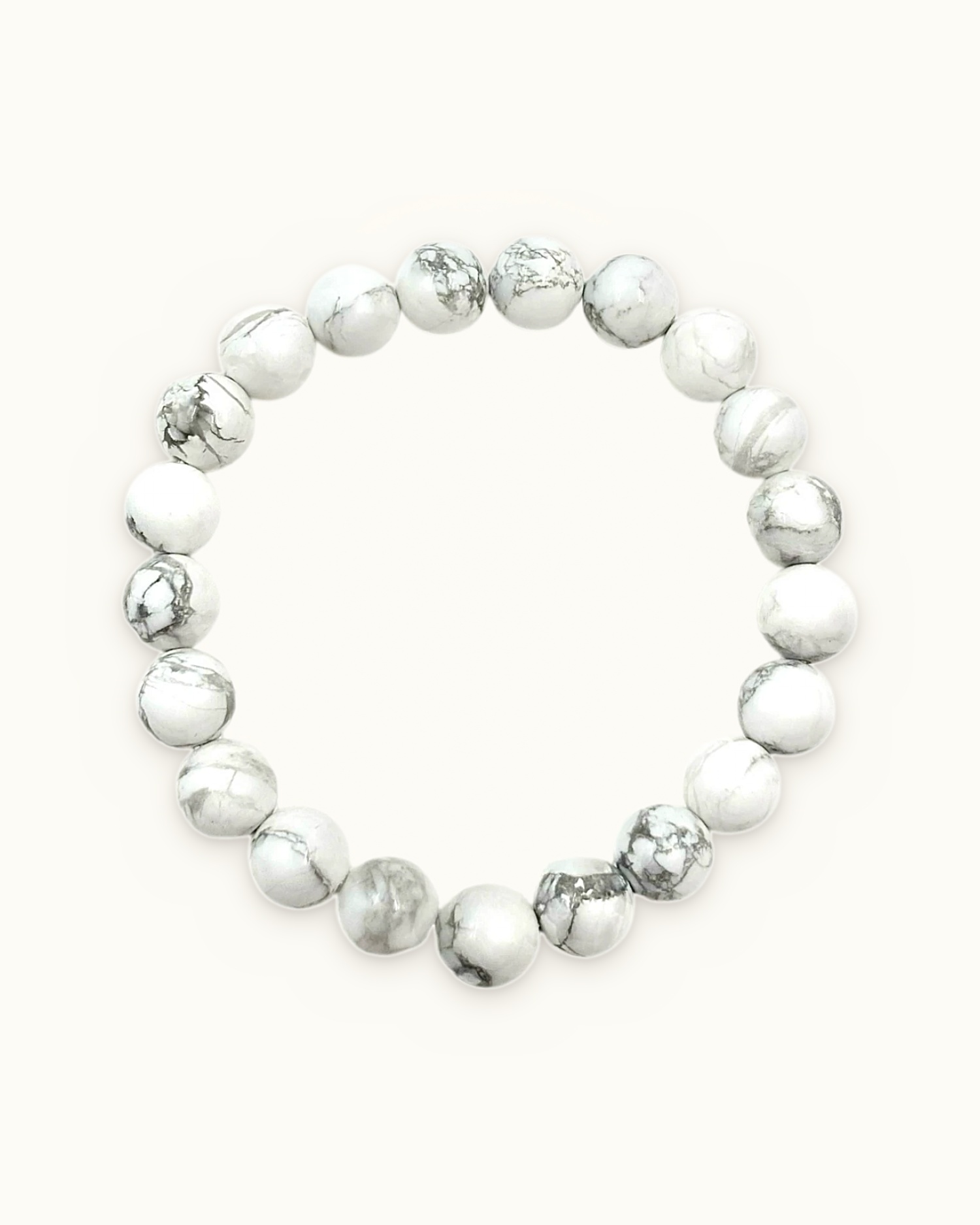
V Howlite bracelet

Howlite

Nature's own signature, on a white canvas

Howlite's soft porcelain white does not stand out on its own — it is the "grey and black veining," drawn freely and without pattern through the stone, that makes it so memorable. Some pieces carry only a faint thread; others weave into intricate patterns, like an old map. It makes every Howlite one of a kind in all the world — a work of art nature left behind at the tip of its brush.

The stone entered modern science in 1868 in Nova Scotia, Canada, through Henry How — a chemist and geologist who found this calcium borosilicate crystal in a gypsum mine. In time, his name was given to it in honour: Howlite.

Unbound by ancient legend, Howlite's meaning has passed instead through modern psychology and healing. Its clean white surface is like an empty mind, while the grey lines are like a stream of passing thoughts. So Howlite is held to be a "Stone of Calming & Patience" — the one people reach for on a short-tempered day, to let anger ease and release the tension gathered in the heart.

When an emotional storm breaks, we tend to grasp for answers and want to settle everything at once. Yet Howlite's message is the opposite — it reminds us to "slow down," to pause, to breathe deeply, and to let the tangle of it all loosen, gently, in its own time.

For the grey lines on white may never truly go away — just as the wounds, or the lessons, of a life are never quite erased… only, once we are aware and clear-eyed, we no longer let those marks take over the whole of who we are.

Family
Borate
Color
White, grey veining
Hardness
3.5 (Mohs)
Character
Opaque, soft
Bead size
8 mm
Price
฿690
Enquire · Made to order →

* Family, hardness and origin are general references for each type of stone. Being natural, every stone may vary a little in color, pattern and tone.

Become a Founding Member
Get in Touch

Begin a conversation
with what you are looking for

We are here, when you are ready to begin.